How to check an AI-written resume for invented claims
A review pass for AI-assisted resumes: where fabrications hide, which claims to verify first, how to fix them.
7 minute readPublished Updated
Short answer
Check the draft claim by claim against something outside the document, because an invented line reads exactly as smoothly as a true one. Numbers, technologies, ownership verbs, titles, dates, and credentials are where invention collects, so start there. Anything you cannot trace gets written down to what you can prove, or cut.
Do this next
- Put the draft beside your own record of jobs, dates, tools, and results.
- Mark each sentence supported, reworded but still supported, or unsupported.
- Rewrite each unsupported line as the nearest thing you can actually stand behind.
- Delete anything with no true version, and let the next real point move up.
- Run the pass in a separate sitting from the drafting, or hand it to someone else.
Why you cannot skim-check an AI draft
AI-invented resume content does not look wrong. It is written in your voice, sits beside true statements, and describes things you plausibly could have done. Skim a polished draft and your eye confirms fluency. The fabricated line reads exactly as smoothly as the real ones.
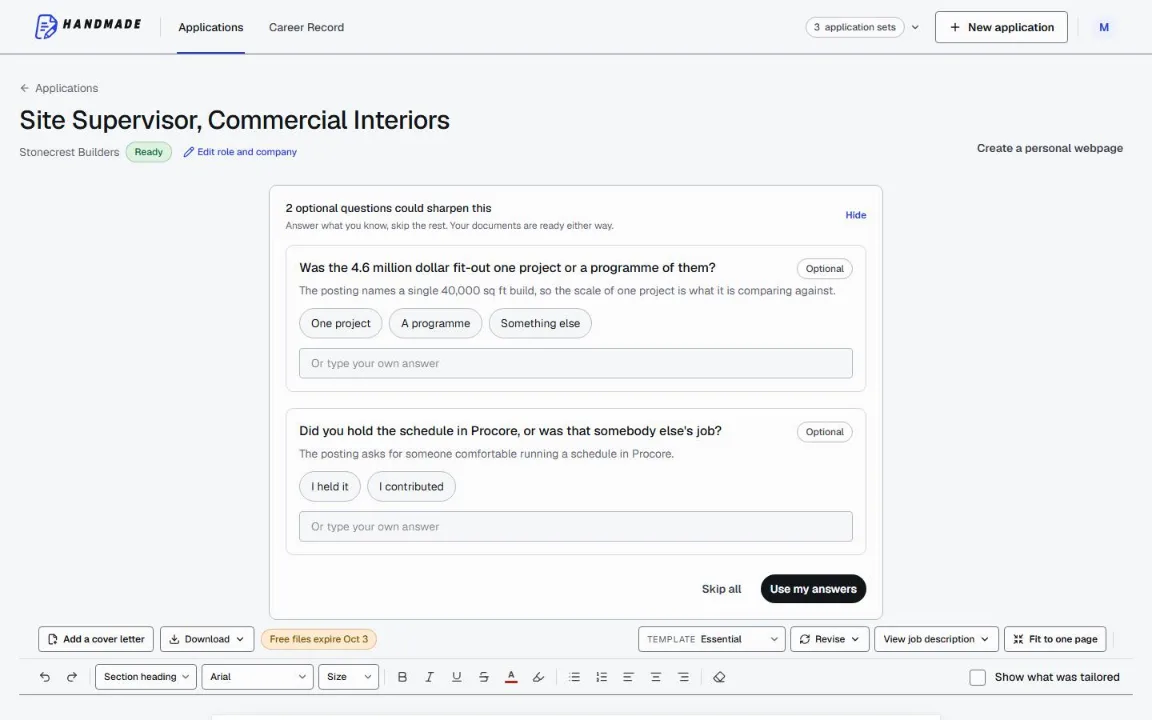
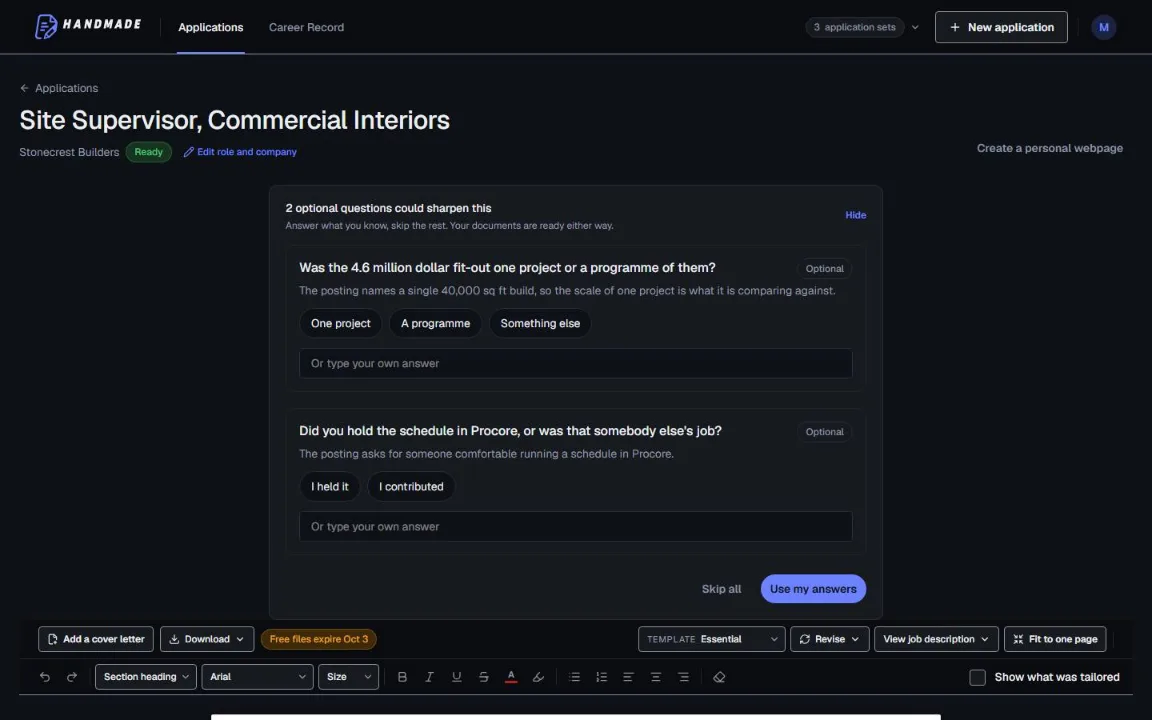
The only reliable check is mechanical. Go claim by claim, against a source of truth that exists outside the document. This guide is that procedure in manual form. Our product runs the same discipline for you against the career record you approved, on every document, with no version of it held back for a higher price.
The high-risk claim classes
Fabrications tend to cluster in predictable places. Check these categories first, in every AI-assisted document:
- Numberspercentages, dollar amounts, team sizes, and durations the model added to strengthen a bullet.
- Technologiestools from the job description grafted into your experience.
- Ownership verbs'led' and 'designed' where the truth was 'contributed to.'
- Titles and datessilently normalized or shifted to look cleaner.
- Credentialscertifications inflated from courses, or degrees renamed.
- Scope'enterprise,' 'cross-functional,' 'production' added as free upgrades.
The verification pass
Put the draft beside your master resume or career record. For each substantive sentence, find its source. Mark every sentence as supported, reworded-but-supported, or unsupported. The middle category is fine, and that is what tailoring is. The third gets fixed or cut, never negotiated with.
Run the pass in a different sitting from the drafting. Better, hand the checking to something that never saw the drafting conversation, because a reviewer sharing the writer's context inherits the writer's assumptions and waves through its own sentences.
Invented-Claim Auditor
Paste one fact you can back up, then the AI-written line. It highlights the dates, numbers, and claims the draft adds that your source doesn't, so you can check them before you use them.
One thing you can back up: a real bullet, note, or accomplishment.
Paste the line an AI tool produced from that fact.
Fixing without starting over
An unsupported claim usually has a true neighbor. 'Led the migration' becomes 'worked on the migration team responsible for...'. 'Cut costs 30%' becomes 'reduced processing costs' or gets the real number from your records. Precision costs one line of punch and buys you an interview you can win.
If a claim has no true neighbor, delete it and let the next-strongest real evidence move up. A shorter honest resume is far easier to sit across a table and defend than a longer one you are nervous about.
Common questions
How often do AI tools invent resume content?
What happens if an invented claim is discovered?
Does this product remove the need to check?
Use this in Handmade Resume
Keep your full work history in one Career Record, then tailor the top of your resume for the role you want. You can edit every line before downloading a format-checked PDF or DOCX.
2 complete application sets free, at the same quality as a paid plan. No card required.