Philippine resume format and the Personal Data Sheet
What belongs on a Philippine resume, why the photo question is argued locally, and how the Personal Data Sheet differs.
7 minute readPublished Updated
Short answer
A private-sector resume here reads like a resume anywhere: commonly one to two pages, single column, newest first, sent as a PDF unless Word is asked for. Leave the photograph off by default and add it only where the posting asks or the work is genuinely appearance-facing. The Personal Data Sheet is a separate prescribed government form with its own instructions, and no resume stands in for it.
Source: CS Form No. 212, Revised 2017 (Personal Data Sheet), with its guide and Work Experience Sheet, Civil Service Commission (Philippines)
Do this next
- Work out first whether the employer wants a resume or the government form.
- Cut TIN, SSS, GSIS, PhilHealth and Pag-IBIG numbers from anything you send.
- Remove date of birth, age, civil status, height, weight and blood type.
- Drop the photo unless the posting asks, and link a professional profile instead.
- Ask each referee before naming them, and only once somebody requests them.
What goes on a Philippine resume?
A private-sector resume in the Philippines looks much like a resume anywhere: name and contact details, a short summary if it earns its place, work history in reverse chronological order with specific results, skills, and education. Commonly one to two pages, single column, sent as a PDF unless the employer asks for a Word file.
Philippine advice gets confusing for two reasons, and the format is neither of them. Two completely different documents get called a resume in ordinary conversation here, and several conventions taught in school are now openly argued over by the people doing the reading. Understand both before you copy a template off the internet.
Should you put a photo on your resume in the Philippines?
This one is genuinely unsettled locally, which is why you keep finding confident answers pointing in opposite directions. Many Philippine graduates were taught that a resume carries a photo, at the familiar 2x2 size, and plenty of employers still receive them without comment. Meanwhile local practice appears to be moving the other way, toward leaving it off unless the employer specifically asks for one.
The argument against it has nothing to do with taste. A photo invites judgements that have nothing to do with whether you can do the work, and it can expose the employer to a complaint about how a decision was reached. Some readers strip it before passing your file on, which leaves a hole where your layout used to be.
A workable rule: leave it off by default, and add it only when the posting asks or the role is genuinely appearance-facing. If you want a face attached to your application, a link to a professional profile does that job without printing a photograph on the document itself.
Is the Personal Data Sheet the same as a resume?
No, and confusing the two is a costly mistake in this market. The Personal Data Sheet is a prescribed government form used for civil service employment, CS Form No. 212 in its 2017 revision, issued with its own filling-up guide and a Work Experience Sheet. The layout is prescribed down to the box, and you accomplish it rather than write it. Nothing about it transfers to private hiring.
Its fields call for material no private resume should carry: your GSIS, Pag-IBIG, PhilHealth, SSS, and TIN numbers; date and place of birth; sex; civil status; citizenship; height, weight, and blood type; your spouse's name, occupation, and employer; the full names and birth dates of all your children; your father's name and your mother's maiden name; and every school you attended from elementary onward.
It also closes in a way no resume does. The form's instructions call for your signature, a right thumbmark, a government ID number with its date of issue, and a sworn declaration before an administering officer, with a warning that misrepresentation can lead to administrative or criminal proceedings. That is a sworn statement, not a marketing document, and the honesty standard on it is literal.
So the question to answer first is which document you are actually being asked for. Government post: you will need this form, usually with a work experience sheet attached, and your resume does not substitute for it. Private employer: none of the above belongs anywhere near the file you send.
Source: CS Form No. 212, Revised 2017 (Personal Data Sheet), with its guide and Work Experience Sheet, Civil Service Commission (Philippines)
What photo size does the Personal Data Sheet actually require?
The form's instructions call for a passport-size picture of 4.5 cm by 3.5 cm, taken within the last six months, rather than a 2x2. The 2x2 is the figure that circulates whenever Philippine photo conventions come up, and 2x2 inches is roughly 5 cm square, so the form is asking for a different photograph entirely.
The 2x2 is a real convention, just not this one. It is commonly the general-purpose Philippine ID photo for school records, enrolment, and a long list of other forms, which is why it feels like the default answer to any question about a picture. The civil service form's instructions ask for something else, and a heavily filtered or edited image does not meet them.
The practical consequence is small but real. If you had 2x2 prints made and assumed they would cover everything, they will not cover this. And if you were reaching for that figure because something you read said Philippine resumes need a 2x2 photo, it was describing the general ID-photo custom rather than the form, and the form itself is one you are most likely not filling in at all.
Source: CS Form No. 212, Revised 2017 (Personal Data Sheet), with its guide and Work Experience Sheet, Civil Service Commission (Philippines)
Do you still list character references on a resume?
Less often than you were taught, and the expectation is visibly moving. The older Philippine convention, as commonly taught, was a block of three named character references at the foot of the resume, with positions and mobile numbers. Local practice now appears to lean the other way: references are optional on the document itself, and the working standard is to supply them when they are asked for.
There are practical reasons for the shift. Publishing other people's contact details on a file you scatter widely creates a small privacy problem for somebody who did not agree to it. Referees get called cold and answer badly. And the space is better spent on evidence about your own work, which is the thing the reader came for.
When you do provide them, on the document or afterwards, the rules are the same.
- Ask every referee first, and tell them which role and which employer.
- Choose people who have genuinely worked with you, not family friends.
- Three is plentyname, current position, organisation, and one contact route.
- Keep them current, because a referee whose number has changed is worse than none.
- If the posting does not ask for them, write nothing and hold them ready.
What should you leave off a Philippine resume entirely?
Almost everything below is either a Personal Data Sheet field that wandered onto a resume or a detail that hands the reader something to judge you on other than your work. Cutting them costs you nothing and usually buys back a cleaner, more readable page.
Two of them carry real weight here. Government numbers are exactly what identity fraud needs, and a resume is a document you deliberately hand to strangers who forward it onward. Age is something an employer may not require you to declare during the application process and may not decline you for, so putting it in front of the decision helps nobody, least of all you; civil status is the same sort of detail by convention.
- Government numbersTIN, SSS, GSIS, PhilHealth, and Pag-IBIG.
- Date of birth and age.
- Civil status, and your spouse's or children's details.
- Religion, and political or organisational affiliations.
- Height, weight, and blood type.
- Your full home address; the city or province is enough.
- Expected salary, unless the posting explicitly asks for it.
Source: Republic Act No. 10911, Anti-Age Discrimination in Employment Act, The LawPhil Project (Arellano Law Foundation)
Common questions
How long should a Philippine resume be?
Is a resume enough when applying for a government job?
Source: CS Form No. 212, Revised 2017 (Personal Data Sheet), with its guide and Work Experience Sheet, Civil Service Commission (Philippines)
Should I remove my age and civil status?
Source: Republic Act No. 10911, Anti-Age Discrimination in Employment Act, The LawPhil Project (Arellano Law Foundation)
Do I have to tell my references before listing them?
Use this in Handmade Resume
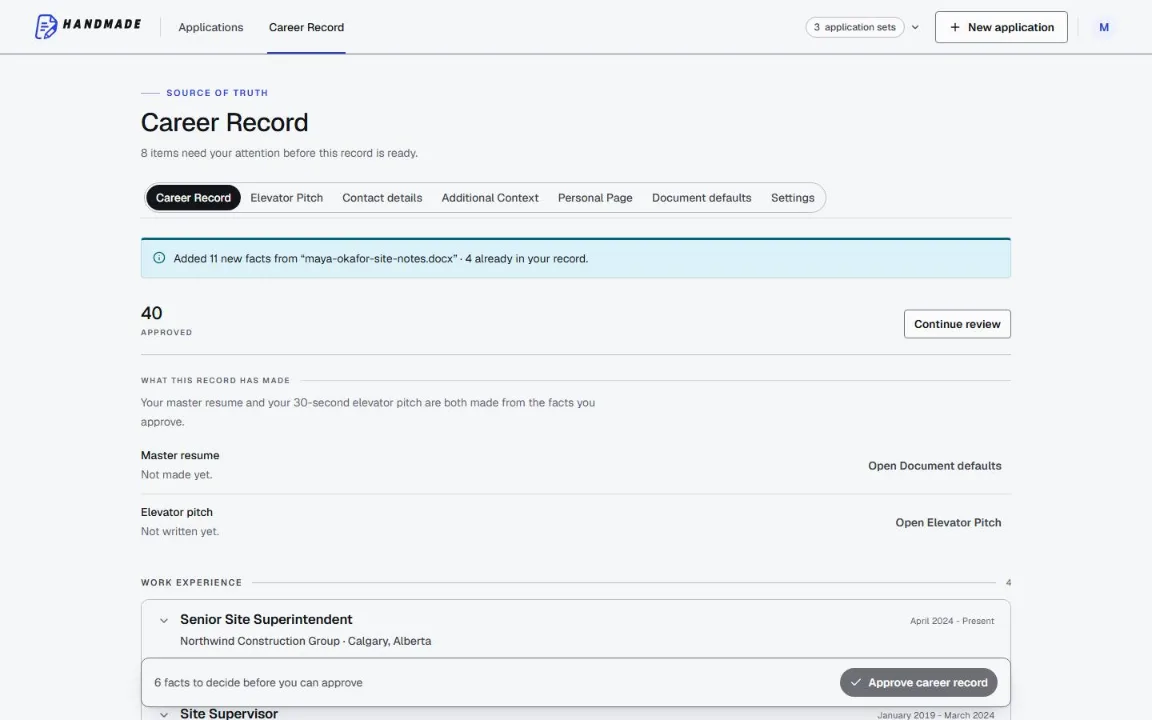
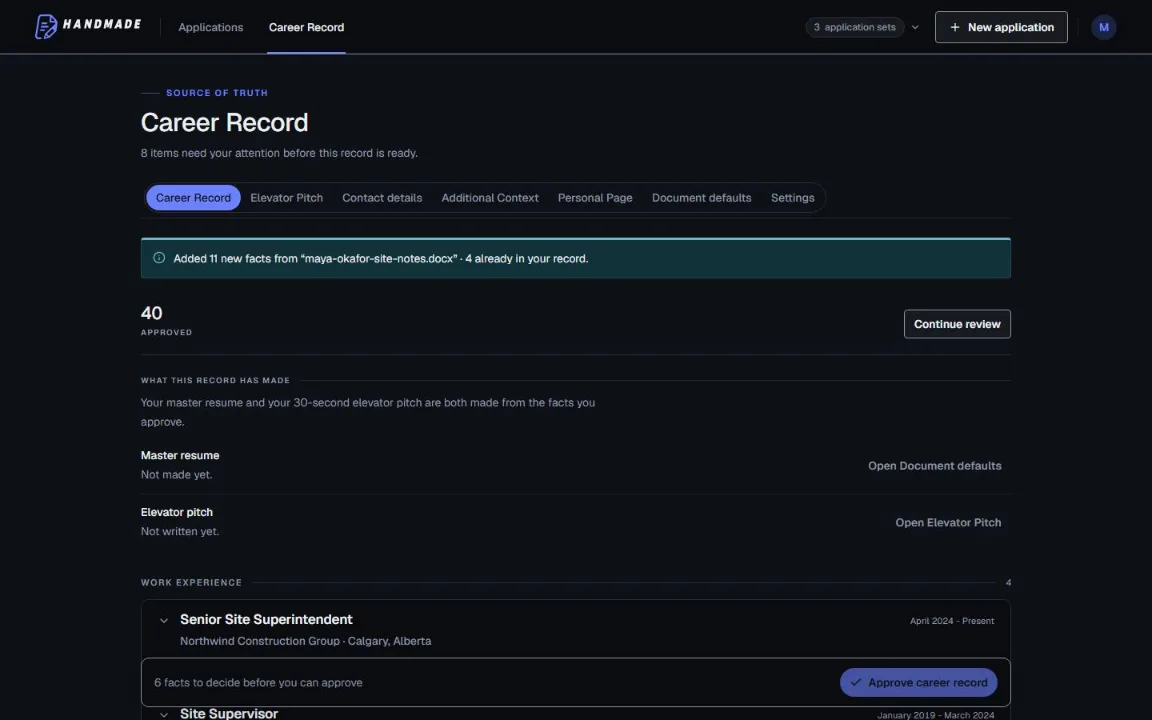
Keep your full work history in one Career Record, then tailor the top of your resume for the role you want. You can edit every line before downloading a format-checked PDF or DOCX.
What you get, exactly: We build an English resume or CV of one to two Letter-size pages (the DOCX is editable if you need A4), with real selectable text. We do not produce the civil service Personal Data Sheet: that is a prescribed government form with its own pages and instructions, including a photograph specification, a thumbmark and a sworn declaration, and nothing generated here can be filed in its place.
2 complete application sets free, at the same quality as a paid plan. No card required.